
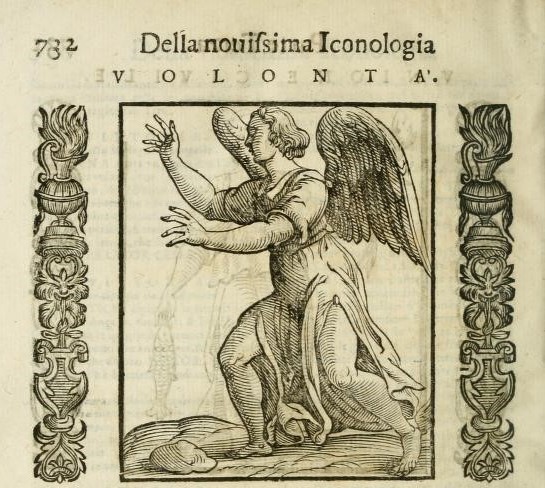
The question "are we free?" has an infinite number of nuances and can be approached from various disciplinary perspectives. Theological, juridical, and psychological answers can be found there. However, the question is primarily philosophical. What does "will" mean? What does it mean to "be free" and "make a choice"? The history of philosophy offers no unequivocal answer to these questions. At the same time, philosophers have been interested in this issue for centuries. Since antiquity, the relationship between will and natural causality has been explored, for example by Aristotle, the Stoics and Alexander of Aphrodisias. In the Middle Ages, the search for the meaning of free will was influenced by theological and religious concerns: Augustine’s On Free Will is just one of the many examples of the medieval fortune of this debate. The tension between philosophy and theological thought exploded in the early modern age, with the famous dispute between Erasmus and Martin Luther. But the discussion went on, until the dawn of the contemporary era.
In the course of this seminar, we will examine and problematize some relevant theories on free will from antiquity to the early modern period. Following a historical-philosophical method of investigation, we will contextualize the different interpretations, trying to interpret them both with respect to their own context, and as for the theoretical-philosophical relevance they still hold. Purpose of this seminar will be to get acquainted with a relevant philosophical issue in a diachronic and comparative fashion, and to question the texts to obtain answers that may still be valid in contemporary times.
- Dozent/in: Francesco Molinarolo