
This course traces the historical evolution of contemporary US-American comics as a popular visual medium, examining their roots in the broader development of visual print culture in the United States. We will begin by exploring how periodicals shaped political visualities in the young nation, starting from the American Revolution (1775) onward.
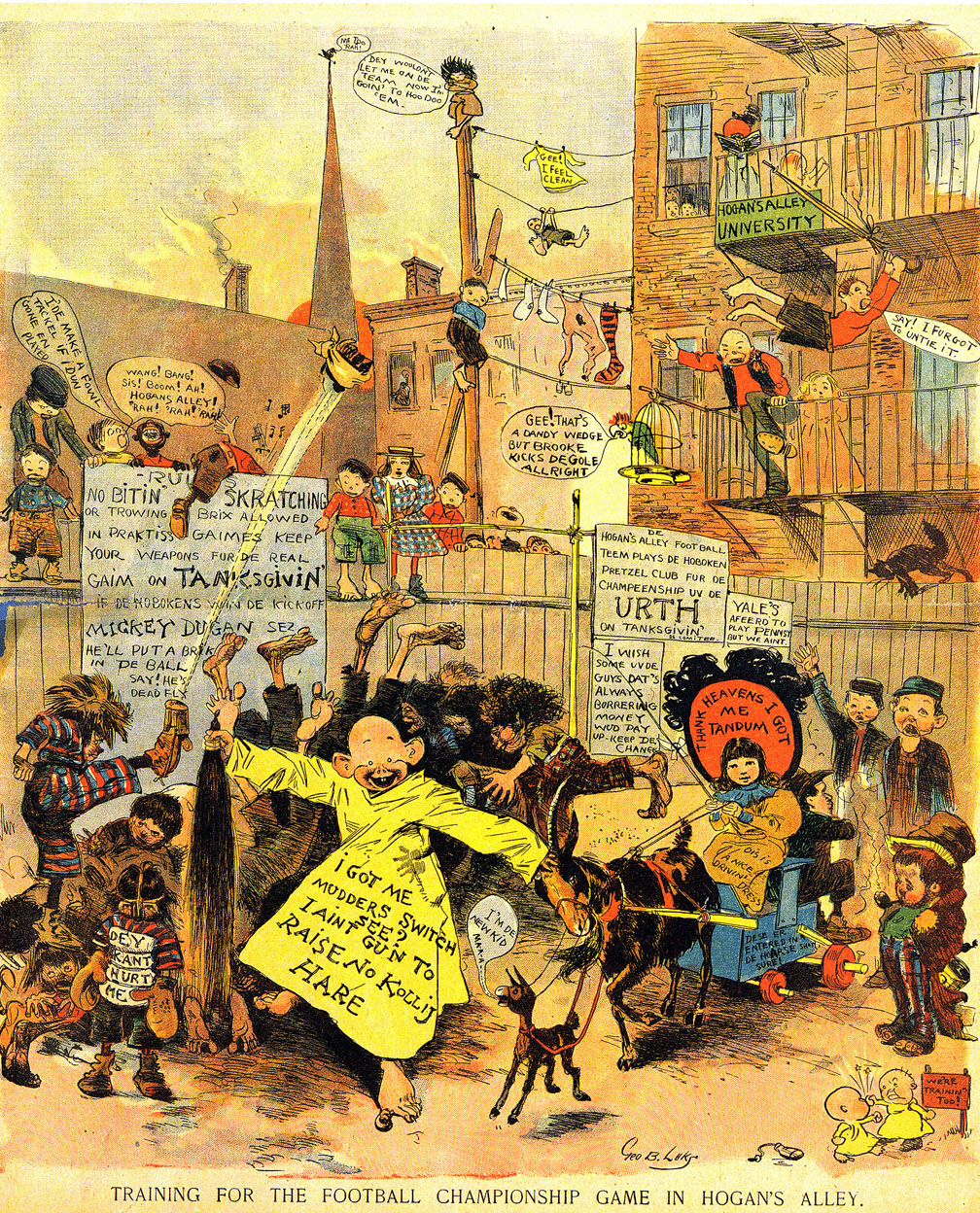
By focusing on visual satire and editorial cartoons of the following periods, we will take a closer look at the development of print culture from the middle of the 18th century, followed by the rise of early modern magazine culture in the 19th century, with its weekly periodicals such as Harper’s Weekly, Judge, and Puck featuring proto-comic strips and gag cartoons. As magazine culture gradually gave way to daily newspapers in the early 20th century, the newspaper comic strip experienced rapid development, a process that we will explore in depth in the second part of the course by discussing key authors and titles of the Progressive Era.
The affordances of the printed visual culture developed hand in hand with its means of production, from woodcut and engravings in copper to lithography in the middle of the 19th century, and eventually, color printing in the early 20th century, the shift that we will address in tracing the development a comic strip, which Thomas Inge later defined as a distinctively ‘American creation’ and which later paved the way for comic books and graphic novels, marking a significant transformation in the medium.
- Dozent/in: Svitlana Stupak